12.4.10

what i learnt : The Caribbean School of Architecture Strucutural Analysis

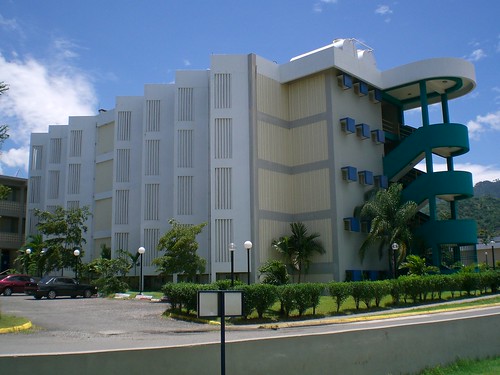
Caribbean School of Architecture building
C.S.A


Built by Lascelles Dixon (whom I had the pleasure of meeting)
40 Shortwood Rd. Suite 11

4 Storey buillding
Basement - Lecture theatre and Presentation room
1st Floor - Smart room and First/Second Year Design Studio
2nd Floor - Staff room and Architecture Library
3rd Floor - Upper Staff area and Third year studio
4th Floor - Masters studio and Critique rooms 1 & 2

Souther stairwell was designed to act as a pavilion for students to watch activites on the field.

Foundation Type: Pad Footing with Ties between individual pads
Building Type : Frame Building, 3m spaced column and 9 m span beam set up.
Soil Type : Sandy Loamy Soil, Compacted over time. - Good soil

Grid Diagramming shows that the main section of the building is supported by columns D2 through to N2 and D5 to N5 on the easter face.

The walls of the building can be knocked out and moved without damage to the building superstructure
Pad Footing - L Dixon

The Northern and southern walls are called shear walls which prevents the building from failing in the manner shown below.
Shear walls are without openings as these openings such as fenestration and doorways reduce the strength of the wall as a whole.

Another factor that add to the buildings stiffness is that the floors are all homogeneous.
The Triangular forms on the Western edge is design to keep out bright sun while allowing ventilation and diffused light into the studios.Similar tactics are employed on the roof where north light is ushered into the Critique rooms

See Previous post for additional images CSA UTECH Models and Pictures

DCH Blog
Alistair Douglas


8.4.10

Caribbean School of Architecture : Models and Pictures

I happened to be analysing CSA for Structures and blundered into these images of some models.
Carribean School of Architecture 3d Elevation Model


Taken from
http://www.prezentmodels.com/CaribbeanSchoolofArchitecture.html


Eary Phases


Its REALLY sad that after typing Csa UTECH in google images the 8th picture is my BLOGGER Profile Picture

DCH Blog
Alistair Douglas


7.4.10

How to use more of your brain?

You --really_want_to-- know?


It's not easy.

Okay, that scared off all the lazies.


It's not complex.

Alright, that angered the self-reflexive tortured artists.


It's not popular.

Good, that alienated the mediocre.


It's not normal.

Yes, there go the cowards.


10 Simple Steps
to Using More of
Your Brain...


All you have to do is \stretch/ your brain.

All one need do is /focus\ the mind.


Law of Brain Expansion

Unused areas of the brain

are activated by perceiving, thinking and doing new things.


Your instructors will be:

the New
the Different
the Bizarre
the Difficult
the Uncomfortable
the Scary
and the Unknown.

Your classroom will be
The Universe and All It Contains,
including mysterious laws and
regions of your own psyche.

1. Think more.

Reduce passive, brain dead soaking up of entertainment, gamesplaying, gossip, mindless trash culture, Hollywood shenanigans, who-dunnit murder mysteries.

Avoid dumbed down entertainment, sponsored sports, broadcast news, popular culture, established traditions, mainstream trends, peer-pressured opinions.

Seek the innovative, controversial, ground-breaking, emergent, radical.

Ask yourself questions. Conduct a silent self-interview. Auto-encapsulate yourself.

Wonder about things you've never stopped to consider.

Why is the universe so vast?

Why is there something rather than nothing?

Is nothingness possible, perhaps 589 trillions years into the future, once the human race learns how to wipe out the entire cosmos?

What are your goals? Priorities? Spiritual beliefs? Favorite films?


2. Read difficult books.

Derrida, Blanchot, Lacan, Levi-Strauss, Mallarme, Rilke, Proust, Hegel, Bible, Koran, Yoga Sutras of Patanjali, Galileo, Hawking, Einstein.


3. Have stranger adventures.

Go to a restaurant in a part of town you've never been in, in a different economic class or ethnic mix.

Stop doing the same things in the same places with the same people.

Deliberately take a new route, visit a new blog, try writing a poem, take homemade chocolate chip cookies to a neighbor you don't know yet.


4. Learn a new skill.

Tackle RSS, HTML, ASP, PHP, XML.

Buy a graphics program (PhotoShop, Poser, Paint Shop Pro) and start creating photo manipulations or digital art.

Start a blog. Upload photos or art to your blog. Take swimming or diving lessons. Plant a garden. Join a bird-watcher group. Discover how to deconstruct a text. Become an email message writing expert.


5. Look at art.

Something happens in the brain chemically and electronically when viewing art.

Find the best, wildest, most exciting art on the web or in galleries, books, or magazines (Art Forum, Art in America, Flash)...and stare at it.

Try to figure out how it was done. Note your emotional response. Try to do something similar or as a reaction against it.


6. Discuss deep subjects.

Ask your friends, family, neighbors what their opinions are on infinity, eternity, heaven, hell, karma, angels, dreams, animal intelligence, nuclear power, herbal remedies, meditation for stress relief, human evolution, cloning, terrorism, nationalism, mind control cults, unethical business practices.


7. Respect other opinions.

Encourage others to think for themselves, form their own judgments, and speak their minds.

Ask your friends questions you've never asked them, about subjects you have no idea what their opinions could be.

Listen. Notice if opposing viewpoints have any redeeming qualities. Are you sure your opinions have no serious challengers?

Most people change certain aspects of, or entire, belief systems multiple times during their lives. No adult believes all they believed when they were a child or a teenager.


8. Make friends with aliens.

Are all your friends in your racial, economic, religious, political, vocational, gender, or professional class?

That's horrible then. You have no new stimulation intellectually, except random distortions via media.

Become close friends with aliens from other cultures, age groups, physical disabilities, mental handicaps, industries, spiritual orientations, nationalities, politics, philosophies.


9. Understand what you hate.

Take something that bothers you, angers you, or you have zero interest in. Try to discover first: why you don't like it. Then: what good qualities reside in it. Also: what you can gain from it or contribute to it.

Everybody hates something. That's what business is built on. You hate work, so you buy labor saving devices. You hate boredom, so you purchase home entertainment systems, or read blogs.

Force yourself to be controversial to your own self: investigate your "opposing party" or "antagonist", your polar opposite.

Not horrid evil, perversions, criminal acts, or sinister cults. Just a lifestyle or skill or belief you dislike or are bored by.

Enthusiasm, or at least more intelligent understanding, will result.


10. Ponder opposites & possibilities.

Interrogate items. What if this were much bigger? Super small? Round instead of square (like a web site or computer monitor). Why aren't books triangular? What if water wasn't wet? What if the universe is illusory, and all that exists is thought?

What would an ice phone be like? Good for spys? What could be made of ice but isn't? Can you mold steam into transitory art forms? Could I be the first steam artist?

What if I were black (white, Asian, Eskimo, Native American, Canadian)? How would I be different?

Is there a fire that can stop a fire? Can water be wetter? Can reading replace speaking? What if we all lived forever in indestructible bodies or as spirits?

What could I do to my blog that is totally different from what I'm now doing?

Could I try posting a ridiculously weird or super personal or oddly scholarly essay?

Post an image with no text?


Follow this path to increased brain power.


These simple tasks

E-X-P-A-N-D the brain.

Final project requirements

anne_hodges


Presentation Requirements


Handin for Project 03 is Thursday April 15 @ 4pm

You are required to submit 3 sheets of 18”x24” drawings with the following information:

• A site plan/layout defining the relationship of the home to landscape features, site circulation, and off-street access.
• A scaled plan reflecting the ordering of spaces and circulation in accordance with the stated concept of home.
• Building elevation/s as required to show envelop materials, proportions, and general character.
• A full or partial building section drawn at an appropriate scale. Section and details are to include correct graphic symbols and text.
• Information about the sustainable strategies integrated in the home
• Written statement about home and the concepts embedded in it.
• A monochrome mass model to fit on the class site model (1:200).
• A larger model that indicates the 3D ordering of the spaces

Any questions regarding presentation requirements? Make a comment in the comments section of this post.
DCH Blog
Alistair Douglas

29.3.10

Preserving Modern Architecture


PRESERVING MODERN ARCHITECTURE � AND THE FUTURE OF PRESERVATION
David N. Fixler, AIA
Principal, Einhorn Yaffee Prescott, Architecture & Engineering
President, DOCOMOMO-US/New England

The modern movement in architecture produced a body of work of a scale and impact
unprecedented in the history of humankind. Modern architecture was the physical manifestation
of a broad social and philosophical movement that forever changed the course of human history.
At its best, the modern movement captured a spirit of progress, openness and an uplifting of the
human condition, offering to convert lofty civic ideals into physical reality. These ideas not only
reflected the sweeping social and cultural aspirations of the day, but were also a manifestation of
a response to the enlightenment promise of progress that continues to resonate around the world.
It is therefore imperative that we continue to take into account the context and essence of this
generative philosophy as we formulate preservation strategies, so that they may yield
interventions that both reveal and clarify the meaning of the heritage of the modern movement.

As a force that has shaped our environment on an unprecedented scale, there are many sound
economic and cultural reasons for the preservation of modern architecture. In the first place,
there is simply too much of it - hundreds of millions of square feet in many thousands of
buildings � for anyone to suggest that most of it should simply be destroyed and rebuilt; this
solution is neither pragmatic nor ecologically sustainable. But we need to ask two key questions

� How should the work of the modern movement be evaluated and engaged, and what kind of
theoretical framework should guide the preservation of this work? In order to fully address these
questions, we must look not only to the future of modern architecture, but to the future of
preservation itself, as it seeks to grapple with this legacy, and to affirm its own relevance within
contemporary design culture.
The History Gap � Modernism and Contemporary Design
We live in a post modern age, but we have emerged from the era of architectural postmodernism
as it was defined between about 1970 and 1985. The distinction is relevant in that it
acknowledges that the modern movement was finite, but that, as its echoes continue to resound in
contemporary culture, it also continues to challenge �traditional� historicism as an approach to
design. This becomes critically important as we contemplate both a reason for -- and an approach
to -- the very complex task of conserving and enhancing modern buildings.


We must acknowledge history, and that modernism is a part of history. History in this case
should be seen as a post modern synthesis that combines the Hegelian engine of relentless change
with the more contemporary notion that history is not fixed, but that every era subjects history to
constant re-interpretation. The theoreticians of the modern movement embraced the notion of a
perpetually forward looking, linear history of constant progress, whereas today progress is viewed
as being relative rather than absolute, and history, rather than being seen as that which is left
behind, is instead constantly revisited for the refreshment of ideas.

Contemporary design references history in its continued embrace of the aesthetics and technology
of modern architecture, but without the polemic that was inherent in modernism in its relationship
to the entire past history of western architecture. As DOCOMOMO founder Hubert-Jan Henket
points out, this polemic is both technical and aesthetic, but at its essence it is social, driven by a
collective desire to create habitats designed with the instruments of modernity to improve human
life. This suggests, as we set out to infuse contemporary design into modern buildings, that it is
appropriate to acknowledge the continued meaning of this polemic by considering the social or
moral component inherent in any intervention strategy.

Preservation�s Place: A Postmodern Perspective
Carroll Westfall, in his article �What are the Preservationists Preserving?� in Traditional Building
Forum, correctly notes that preservation, as we understand it today, is a modernist enterprise. He
is also correct in his assessment that preservation and traditional building � too often conflated in
the minds of those that prefer the traditional to the modern � are fundamentally different things
that are, in his words, only united in their enmity toward modernism. However, this attitude that
preservation evolved as an antidote to modernism, and specifically to a modern movement that
ruptured the timeless continuum of traditional building, is both misleading in its
oversimplification, and corrosive in its tendency to deny the necessity of coming to grips with
how to address, through conservation and judicious intervention, the considerable and often
wonderful heritage of modern architecture.

If we accept Westfall�s premise that preservation, as it has been defined in documents ranging
from the Athens Charter to the United States Secretary of the Interior�s Standards, is itself a part
of the modernist project, then we should also recognize that preservation must now be adapted to
the post modern present.


Preservation can and should be an activist force for change. It should acknowledge and plan for a
future that can reflect only a selective, and therefore subjective, view of the past. Preservation
strives to elucidate the past through the historical facts embodied in a place, but in fact the
process of intervention will inevitably bring new perception and hence new meaning to the work
through the modification of both the work and its context. To this end, a preserved building�s
future should be designed with the same intellectual rigor and aesthetic sensitivity that inform any
successful, contemporary architectural project.

This suggests that the conventional assumption that preservation and design are diametrically
opposed is rapidly dissolving. Preservation, as it applies to buildings and urban design, is
increasingly recognized as being fully integrated within the practice of architecture, operating out
of a theoretical framework that recognizes the inevitability of change. The goal of preservation
will increasingly become to create dialogues that heighten the perception of the original, while
acknowledging and acting upon this inevitability.

This revisionist approach is well-articulated by scholars like Jorge Otero-Pailos, the editor of
Future Anterior, who views contemporary preservation as an instrument that produces rather than
finds history, through the regeneration of context through intervention, rather than a detached
reaction to a fixed, stable context. While Otero-Pailos advances a theory of critical
historiography that clearly moves beyond modernism, Vittorio Gregotti describes in Inside
Architecture a concept of intervention that reconciles a modernist theoretical position with the
principle of belonging. This concept embodies �interest in the materials of memory, not
nostalgically, but in terms of juxtaposition�forming new orders and groupings by shifting the
context of those materials that belong to memory�s heritage.�

Both authors acknowledge the highly precise but fragmentary nature of contemporary design,
particularly as it relates to modifications, and relative to the aspiration toward �total design� that
characterized much of the modern movement. They recognize the increasing tendency of
successful interventions to be presented as a series of �mini-narratives� that -- at their best � can
sharpen one�s perception of both the original and the intervention, create new, fundamental
meanings for the whole, and also leave open the potential for future modifications. In the world
of heritage conservation, the legitimacy of this approach was acknowledged in a May 2005
memorandum by UNESCO, �World Heritage and Contemporary Architecture � Managing the


Historic Urban Landscape,� that focused on how best to manage growth and change in historic
precincts through precise and sensitive, but contemporary, methods of intervention.

Formulating a Sound Approach to Preserving Modernism in the Postmodern World
Let�s return to our original problem of what to do with modern architecture. On one level, the
legacy of modernism should be documented, classified and treated in the same manner as the
architecture of any historic period. Significant works should be treated with many of the same
disciplinary tools that are utilized in the preservation of traditional architecture, though with
perhaps more focus on the idea of the building, where this idea was important in giving meaning
to the original work. However, we need to acknowledge that the scale, diversity, and material
nature of many of the works of the modern movement -- especially those sometimes labeled
Ordinary Everyday Modernism (OEM) -- offer unconventional challenges to traditional
preservation practice. These challenges can best be met by the kind of rethinking of preservation
itself that is outlined above.

We acknowledge that there is a necessary human dimension found in traditional urban form and
place-making that is lacking in a lot of OEM. This situation should be viewed as an opportunity
to mine the artifacts for latent meaning through a process of critical discovery meant to transform
and �re-humanize� the original. This resembles the strategy that has been adopted by the GSA in
the �First Impressions� part of their Design Excellence program that is creating sensitive
contemporary interventions within the large body of OEM owned by the Federal Government. In
this case, the quality of the original architecture may be augmented through using the existing
buildings as structural armatures upon which to build new experiences, introducing elements of
scale and texture that will reinvigorate and make contemporary (one can�t really say
�modernize�) works that might otherwise seem to have exhausted their useful lives. This strategy
runs counter to the notion of �total design� and recognizes that design is often most successful
focusing on solving small problems and local issues. Compensation for these shortcomings are
made with contemporary elements in line with UNESCO statement that:
��preservation�[should avoid] all forms of pseudo-historical design, as [it] constitutes a denial
of both the historical and the contemporary alike�history must remain readable, while continuity
of culture through quality interventions is the ultimate goal.�

Applying Contemporary Design Principles to Modernist Preservation


The application of contemporary principles to the preservation of modern buildings has
interesting consequences. Engaging the modern movement often means dealing with structures
designed with finite life-spans, and with materials that were not designed to age well, which
means that conservation often has to yield to replacement or substitution as a solution for material
degradation. Because of this, and because of the notion that much of the significant architecture
of the modern movement was driven by the expression of an idea, there has been a tendency to
foreground intent over materials conservation as criteria for authenticity. This is important to
acknowledge in those significant cases where the interpreted work should still evidence the
original architect�s intent, but it should not - as any preservationist will agree � detract from the
necessity of engaging the material artifact. The difference now is that more stress will be placed
upon the creation of a critical dialogue with the essence of the original � both the idea and the
material � rather than treating it as a fixed object awaiting the overlay of the intervention.

The argument is sometimes made that the aesthetic and technical distinctions between the works
of modernism and much of the significant output of contemporary architecture is sufficiently
blurred that we may ourselves still be defined as late modernists. As such, on one level, we can
treat modifications to high modernism as works that can still build upon the form and spirit of the
original, but we must nonetheless acknowledge that modernism�s own history was finite, that we
are now in a different place philosophically, and that the temporal gap between the original and
the intervention � however much the latter may seem to extend the former � should be
acknowledged. As preservationists, our response to the original, modernist idea can be through
extension or through the emphasis of difference; the important thing is that the act of intervention
is clearly acknowledged as a starting point for an architectural dialogue. The process then
becomes one of weaving the modifications into the original in such a way that a continuum is
created that both reveals the past and leaves open possibilities for the future.

The urgency of meeting the challenge to preserve the heritage of the modern movement, and the
emerging activist, critical approach to preservation are inextricably linked. We suggest that this
new synthesis � with its notion of a continuum evolving around a set of values about building,
and accommodating the inevitability of change � actually parallels some of the rhetoric and
practice of the traditional building movement, as noted by Dr. Westfall. His notion that there is a
continuum of building that has been interrupted by the anomaly of modernism has now in a sense
been turned inside out, as we are now dealing with a parallel continuum building upon the
modern tradition that has moved into the post modern era. These efforts should all have the


ultimate goal of encouraging contemporary intervention in a humanist spirit. As we engage the
works of the modern movement as preservationists, so we also advance the transcendent goal of
humanizing our environment, thus preserving and sustaining not just buildings, but a significant
part of our collective cultural legacy.


14.3.10

The CSA AWARDS! Coming to a Studio Near you!


So I brilliant idea was voiced to me that we should have titles and awards for our classmates
This is the template
AWARDS
Sleep King & Queen
Most Distracted
Most Distracting
Mr & Ms Profiler
Chimney
Gunshot Magnet [ Crit ]
Best Bullshitter
worst Bullshitter
Studiophobe
Worrywart
Most Accident Prone
Gimme more ideas.

Also nice stuff like
Most Focused
Best Models etc etc


Lol i have no clue how voting is gonna go lol

DCH Blog
Alistair Douglas

6.3.10

Male Shopping Survival Tips


1. Dont Go in the first place

2.Get in, Get out(This rule is not universal, guys)

3.In the dire event that she is trying on everything in the store
DO NOT PACE!
You will tire yourself into the 6th Netherworld. Find the nearest chair ,railing , ladder etc lest your life forces be drained


"Official Shopping Outlet Clause"

All stores authorized for sale and distribution of female clothes, shoes and other apparel
shall adhere completely and without fail to the following laws:

Law I
Have adequate seating for a male counterpart for every prosective female customer
Law II
A TV with Sports, A movie and News showing shall be on at all times in a convenient location
Law III
A bar with assorted beverage shall be installled

DCH Blog
Alistair Douglas

1.3.10

Hope River Site Analysis brief


CLICK ON THE PICS TO ENLARGE


This way ill never lose the damn handout.
Had to do this because some beneovlent studio mate absconded with mine.

Any ways here.Pics courtesy of eingoluq
DCH Blog
Alistair Douglas


Copyright 2010 DONT COME HERE.

What are you doing all the way down HERE?